About Scafor Steel Planks
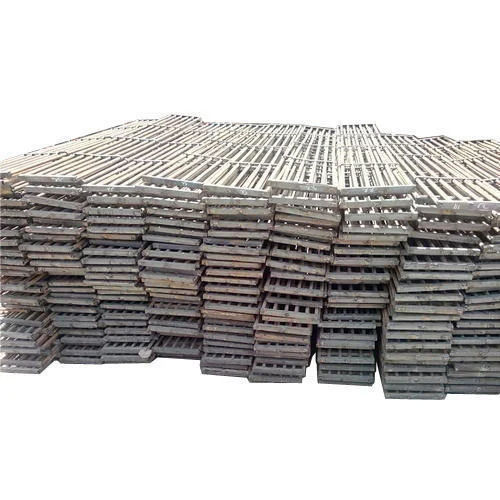
Being a prominent firm, we are engaged in offering Scafor Steel Planks. These are made of high-strength steel and are designed to be durable, long-lasting, and able to withstand the weight of workers and materials. These planks are utilized in construction projects to provide a safe and stable work platform for workers at varying heights. Scafor Steel Planks are also designed to be non-slip, providing a safe and stable platform for workers to stand on. Moreover, these planks can vary in length, width, and thickness, and are often made of high-quality steel that is durable and rust-resistant. These planks are known to be reliable and meet all safety standards required for construction projects.
| Material |
Steel |
| Usage/Application |
Construction |
| Type |
Natural/ Galvanized |
| Surface Type |
Hot Dipped Galvanized |
| Condition |
New |
Exceptional Durability and SafetyEngineered for industrial demands, Scafor Steel Planks offer superior durability, thanks to their pre-galvanized steel composition and a sturdy thickness of 1.2 mm. The folded edges enhance strength, while the perforated surfaces provide crucial anti-slip functionality, promoting a safer work environment. These planks are fire-resistant and built to withstand extensive usage in various weather conditions.
Versatile Applications and Reliable Load CapacityScafor Steel Planks are suitable for a wide range of industrial scaffolding projects. Each plank supports up to 250 kg, making them ideal for demanding tasks across construction, maintenance, and industrial settings. Their compatibility with both plain and hook end types ensures versatility for different scaffolding configurations.
Precision Engineering and Easy InstallationManufactured with a tolerance of just 1 mm and a core material density of 7850 g/cm3, these planks ensure consistent quality and performance. The hot dip galvanized finish offers protection from corrosion, and the rectangular shape, along with customizable sizes, guarantees seamless fitment and straightforward installation.
FAQ's of Scafor Steel Planks:
Q: How are Scafor Steel Planks installed on scaffolding structures?
A: Scafor Steel Planks can be easily installed by placing the planks onto the scaffolding supports. Depending on the end type, either plain or hook ends are used to securely anchor the planks. Their standardized rectangular shapes ensure a snug fit, and the folded edges provide additional strength during placement.
Q: What makes the anti-slip feature effective on these steel planks?
A: The anti-slip feature is achieved through uniformly perforated surfaces on each plank, which provide enhanced grip and reduce the risk of slipping for workers, even in wet or oily conditions. This design greatly improves on-site safety in industrial environments.
Q: When should I choose pre-galvanized steel planks over other materials?
A: Pre-galvanized steel planks are ideal when you require robust load-bearing capacity, fire resistance, and durability in harsh or variable weather conditions. Their weather-resistant finish and non-combustibility make them an excellent choice for industrial, construction, and maintenance projects.
Q: Where can Scafor Steel Planks be used in industrial settings?
A: These planks are suitable for various industrial settings, including construction sites, maintenance projects, factory installations, and repair works, where reliable, anti-slip platforms are necessary for worker safety and efficiency.
Q: What is the manufacturing process behind these steel planks?
A: Scafor Steel Planks are produced from industrial-grade pre-galvanized steel, shaped into rectangular forms with precision-cut edges. Folded edges are incorporated for structural integrity, and perforations are added for anti-slip functionality. Finally, the product undergoes a hot dip galvanization process, providing a durable, corrosion-resistant surface.
Q: How does the weather resistance of Scafor Steel Planks benefit industrial users?
A: The hot dip galvanized finish protects the planks from rust and corrosion, allowing them to maintain structural integrity and safety features even when exposed to outdoor conditions, which results in lower maintenance costs and higher reliability for industrial applications.





 Send Inquiry


 Send Inquiry
 Send Inquiry
 Send SMS
 English
 Spanish
 French
 German
 Italian
 Chinese (Simplified)
 Japanese
 Korean
 Arabic
 Portuguese